

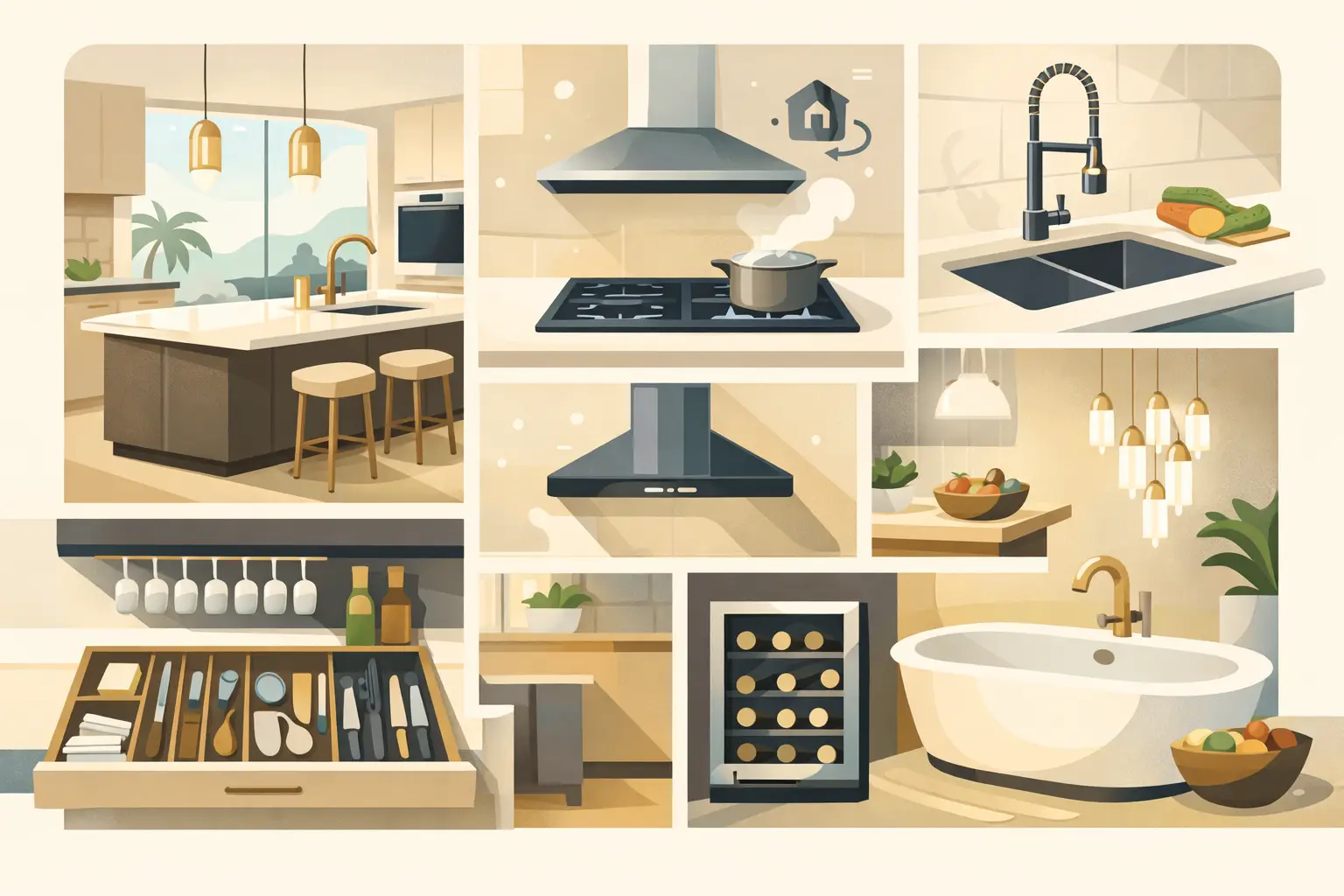
10 Best Features for Luxury Kitchens
A luxury kitchen stops feeling luxurious the moment it slows your day down. If a beautiful island creates traffic, if premium appliances sit in the wrong place, or if storage looks clean but works poorly, the investment misses the mark. The best features for luxury kitchens are the ones that combine strong design with daily ease, so the space looks impressive and lives even better.
For most homeowners, that means thinking beyond finishes alone. Stone slabs, custom cabinetry, and statement lighting matter, but true luxury comes from how the kitchen supports the way your household actually cooks, gathers, hosts, and moves through the home. In high-end remodeling, the smartest choices are usually the ones that feel effortless once the project is complete.
What defines the best features for luxury kitchens?
Luxury is not just a higher price point. It is thoughtful planning, quality materials, and a layout tailored to the people using the space. In practice, the best luxury kitchens blend visual impact with durability, comfort, and performance.
That often starts with customization. Stock solutions can look attractive, but they rarely address the details that make a kitchen feel refined over time. Custom cabinet depths, appliance placement that fits your cooking style, better sightlines to adjacent rooms, and storage built around real habits all create a more elevated result.
It also means choosing features that suit the home. A downtown Denver remodel may call for a sleek, contemporary kitchen with concealed storage and integrated appliances. A larger family home may need layered function, with multiple prep zones, more refrigeration, and stronger traffic flow. Luxury is never one-size-fits-all.
The best features for luxury kitchens that deliver real value
1. Custom cabinetry that goes all the way up
Cabinetry is one of the clearest markers of quality in a luxury kitchen. Full-height custom cabinets create a more finished look, reduce dust-collecting gaps, and add valuable storage. They also allow for cleaner proportions across the room, especially in homes with higher ceilings.
The real advantage is inside the cabinets. Deep drawers for cookware, built-in dividers, hidden charging stations, tray storage, and pull-out pantry systems make the kitchen easier to use every day. This is where craftsmanship matters. A cabinet package can look similar on the surface, but the interior function is what homeowners notice long after the remodel is done.
2. A well-sized island with purpose
A large island is often at the center of a luxury kitchen, but size alone does not make it effective. The best islands are designed around how the space will be used. For some households, that means seating for casual meals and homework. For others, it means uninterrupted prep space, a secondary sink, or extra storage on both sides.
There is a balance to strike here. An oversized island can overwhelm the room and create awkward circulation. A better approach is to size the island to the layout, leaving enough clearance for appliance doors, walkways, and multiple people working at once.
3. Premium appliances with the right layout
High-end appliances are expected in a luxury kitchen, but placement matters just as much as brand. A professional range may look impressive, yet if ventilation is underpowered or the refrigerator is too far from prep areas, the kitchen becomes less practical.
A strong appliance plan usually includes a combination of performance and convenience. That may mean double ovens for frequent entertaining, a built-in refrigeration column setup, a steam oven, or a dedicated beverage unit. It depends on the household. The goal is to support how you live rather than simply checking boxes.
4. Layered lighting that changes with the moment
Lighting has a major effect on how luxurious a kitchen feels. One overhead fixture or a row of pendants is rarely enough. The best kitchens use layers: ambient lighting for overall brightness, task lighting for prep and cooking, and accent lighting to highlight cabinetry, shelving, or architectural details.
Under-cabinet lighting is one of the most practical upgrades because it improves visibility where it matters. Dimmable fixtures also give the room flexibility, allowing it to shift from a bright work zone in the morning to a warmer gathering space at night.
5. Natural stone and other durable surfaces
Countertops and backsplash materials do a lot of visual work in a luxury kitchen, but they also take daily wear. Quartzite, marble, quartz, and porcelain slabs are popular for good reason, though each comes with trade-offs. Marble offers unmatched character, but it requires more maintenance. Quartz is consistent and low maintenance, but some homeowners prefer the movement and depth of natural stone.
The best choice depends on priorities. If you want a dramatic statement piece and do not mind some patina, natural stone may be worth it. If ease of care matters most, engineered options may be the better fit. Luxury means selecting materials with intention, not simply choosing the most expensive option.
6. Hidden storage and pantry planning
A clutter-free kitchen always feels more high-end. That is why hidden storage is one of the most valuable luxury features. Appliance garages, walk-in pantries, integrated trash and recycling pull-outs, and concealed small-appliance storage keep surfaces cleaner and routines easier.
For larger remodels, a separate working pantry can make a major difference. It gives you space for countertop appliances, overflow storage, and meal prep without crowding the main kitchen. If the footprint allows, this feature can improve both the day-to-day function and the look of the space.
7. Statement ventilation and better air quality
Ventilation is not the feature most homeowners talk about first, but it should be part of any serious kitchen plan. A properly sized hood helps protect cabinetry, improves air quality, and keeps odors and grease from spreading through the home.
In luxury kitchens, ventilation can either disappear into the architecture or become a design focal point with plaster, wood, or metal detailing. Either direction can work well. What matters is that the system performs as well as it looks, especially if you cook often or use a powerful range.
8. Integrated appliances for a cleaner look
Panel-ready refrigerators and dishwashers create a more tailored, furniture-like appearance. In open-concept homes, that consistency can make the kitchen feel calmer and more connected to surrounding living spaces.
This feature is especially valuable if you want the kitchen to feel less commercial and more architectural. The trade-off is cost. Integrated appliances usually come at a premium, and service access should be considered during planning. Still, for many homeowners, the polished result is worth it.
9. Smart features that are actually useful
Technology belongs in a luxury kitchen when it improves convenience without adding frustration. Touchless faucets, smart ovens, programmable lighting scenes, leak detection, and refrigerator monitoring can all be worthwhile if they fit your habits.
The key is restraint. Not every connected feature adds value, and some become outdated faster than core design elements. Prioritize technology that solves a real problem or saves time. A kitchen should feel intuitive, not complicated.
10. A layout that supports how you live
The most important luxury feature is often the least visible: the layout itself. A well-designed kitchen considers prep zones, cleanup flow, access to outdoor living, visibility to family areas, and the way multiple people use the room at once.
This is where a remodel can go from attractive to exceptional. A beautiful kitchen with poor circulation will always feel limited. A kitchen planned around your routines can make the entire home work better.
Choosing luxury kitchen features that fit your home
Not every kitchen needs every premium feature. Some homes benefit more from investing in custom cabinetry and layout changes than from adding specialty appliances. Others may already have a strong footprint and simply need upgraded finishes, better lighting, and smarter storage.
Budget matters too, and so does timeline. If you are making a major investment, it helps to prioritize features that improve both daily use and long-term value. In many cases, the strongest returns come from foundational decisions: cabinetry quality, layout, storage, surfaces, and lighting. Those elements shape the experience of the room every single day.
For homeowners planning a remodel in Denver, climate, architecture, and lifestyle can also influence the right choices. Homes designed for entertaining may need stronger indoor-outdoor flow. Busy family kitchens may benefit from durable finishes that hold up without constant maintenance. The right answer depends on your goals, not a showroom checklist.
Where craftsmanship makes the difference
Luxury kitchens are full of details that only work when they are executed well. Appliance panels need precise alignment. Stone fabrication needs clean seams and careful edge work. Cabinet installation needs to account for uneven conditions, sightlines, and long-term durability. Even the best materials can fall short without experienced planning and construction.
That is why the design process should stay grounded in both vision and practicality. At Hammer Hero, projects are shaped around the homeowner’s goals from the start, so the finished kitchen does more than look high-end. It works for the way the home is actually lived in.
The best luxury kitchen is the one that still feels smart five years from now – comfortable to cook in, easy to maintain, and tailored to your routines in ways you notice every day.
