

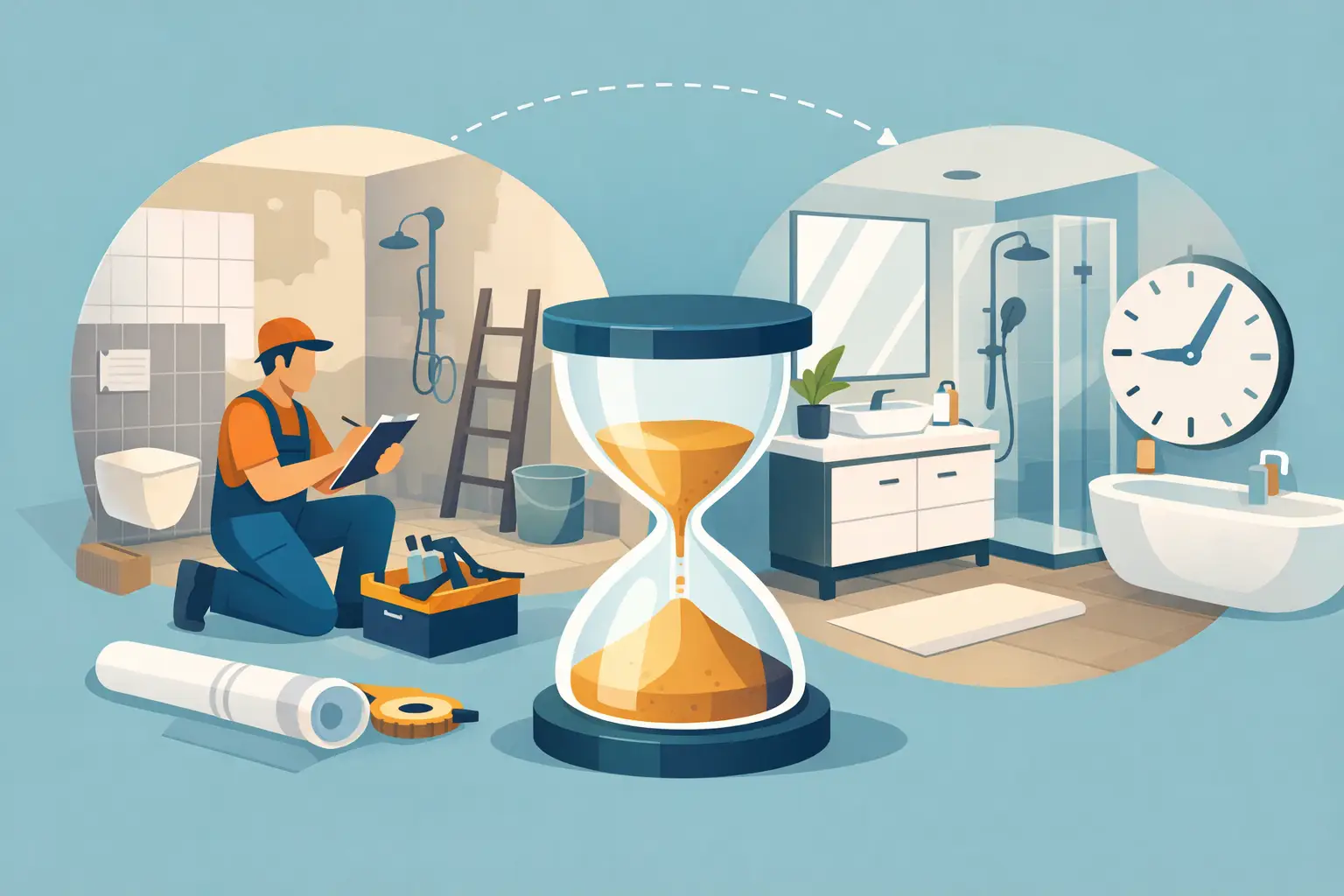
How Long Bathroom Remodel Takes
You can choose tile in a weekend and still wait weeks to enjoy your new bathroom. That gap is exactly why homeowners ask how long bathroom remodel takes before they commit. The honest answer is that most bathroom remodels take anywhere from a few weeks to a couple of months, depending on size, scope, materials, and how well the project is planned from the start.
A quick cosmetic refresh moves much faster than a full gut renovation. If you are replacing finishes but keeping the existing layout, plumbing locations, and electrical mostly intact, the timeline is usually more predictable. Once walls open up, custom materials enter the picture, or structural and plumbing changes are involved, the schedule naturally stretches.
How long does a bathroom remodel take in real life?
For a standard full bathroom remodel, many homeowners should expect roughly 3 to 6 weeks of active construction after materials are ready and permits are approved, if required. A larger primary bathroom, a bathroom with custom tile work, or a project that changes layout can take 6 to 10 weeks or longer. On the lighter end, a surface-level update may be completed in 2 to 3 weeks.
What matters most is not just the number of days on site. It is the full project timeline, including design decisions, product ordering, scheduling trades, inspections, and final punch work. In practice, that means the total process often begins well before demolition day.
Homeowners are often surprised by this distinction. They think of the remodel as the time workers are physically in the room. A dependable contractor thinks about the project as a sequence of connected steps, each one affecting the next. That approach creates a more realistic schedule and usually a smoother experience.
The phases that shape how long bathroom remodel takes
Every bathroom remodel follows a similar path, even though no two homes are exactly alike. Understanding those phases makes the timeline easier to predict.
Planning and design
This stage can take anywhere from a few days to several weeks. If you know exactly what you want and are making straightforward selections, the planning process moves quickly. If you are comparing layouts, deciding between a freestanding tub and a larger shower, or evaluating premium finishes, it takes longer.
That extra time is not wasted. It often saves time later by reducing change orders, backtracking, and rushed product decisions. For higher-end bathroom projects, thoughtful pre-construction planning is usually one of the biggest factors behind a better result.
Material selection and ordering
Some vanities, plumbing fixtures, and tile are available right away. Others have long lead times, especially custom cabinetry, specialty stone, glass enclosures, and certain imported finishes. This phase can add a few days or several weeks to the overall schedule.
If your contractor starts construction before key materials are secured, the project can stall midway. That is why experienced remodelers often prefer to lock in critical selections before demolition begins. It protects the timeline and helps avoid a half-finished bathroom waiting on a missing component.
Permits and approvals
Not every bathroom update requires permits, but many do, especially when plumbing, electrical, or structural work is involved. Depending on the municipality and scope, approvals may move quickly or take a bit more coordination.
For homeowners in the Denver area, local code requirements and inspection scheduling can influence timing. A qualified contractor should account for this upfront rather than treating it as a surprise later.
Demolition
Demo is usually one of the fastest phases. A typical bathroom can often be demolished in 1 to 3 days. If the space is large, built with heavy mortar materials, or located in a way that requires extra protection for the home, it may take longer.
This is also the moment hidden issues often appear. Water damage, mold, outdated wiring, or old plumbing can change the scope. That does not mean the project has gone off track. It means the real condition of the space is finally visible.
Rough plumbing, electrical, and framing
Once the room is open, the behind-the-walls work begins. This phase commonly takes several days to more than a week depending on how much is changing. Keeping fixtures in their current locations saves time. Moving a toilet, expanding a shower, adding lighting, or updating ventilation adds complexity.
Then inspections may be required before walls are closed. Inspection timing is not always in the contractor’s full control, so a good schedule builds in realistic space for that step.
Drywall, waterproofing, and tile
This is where bathroom remodels often slow down, and for good reason. Wet areas need proper waterproofing, and tile installation is detail-heavy work that should not be rushed. Drying and curing times also matter.
A simple tub surround goes faster than a fully tiled walk-in shower with niches, accent bands, a bench, and floor-to-ceiling walls. Large-format tile can speed up some installations, but only if the substrate is properly prepared. Intricate patterns and natural stone typically take longer because craftsmanship matters at every step.
Fixture installation and finishing work
Once tile and walls are complete, the remodel starts to feel close. Vanities, faucets, toilets, mirrors, lighting, trim, hardware, and glass are installed. This stage may take a few days to a week depending on the level of customization.
Custom shower glass is a common timing factor. It is often measured after tile is complete, then fabricated and installed later. That means even a nearly finished bathroom can still need one final scheduled visit.
Final punch list
The last phase is about refinement. Small adjustments, touch-up paint, hardware alignment, caulking, cleaning, and a final walkthrough help ensure the bathroom feels finished, not just functional. In a quality-driven remodel, this stage matters.
What causes bathroom remodel delays?
The biggest delays usually come from three sources: hidden conditions, product availability, and mid-project changes. None of these are unusual. The question is whether the project team anticipates them well.
Hidden conditions are part of remodeling older homes. A bathroom may look straightforward until demo reveals subfloor damage or plumbing that no longer meets current standards. Fixing those issues takes time, but skipping them creates bigger problems later.
Material delays are another common culprit. A backordered vanity or damaged tile shipment can interrupt the sequence of work. This is especially relevant for homeowners choosing premium finishes or custom-built components. High-end selections often reward patience, but they need better planning.
Mid-project changes can be the most preventable delay of all. If you decide halfway through that you want a different tile layout, a larger niche, or a relocated light fixture, the schedule will likely shift. Sometimes those changes are worth it. They just need to be understood as timeline decisions, not only design decisions.
Small bathroom versus primary bath timelines
A powder room or compact guest bath usually moves faster because there is less square footage, less tile, and fewer fixtures. Even then, small does not always mean simple. Tight spaces can be more labor-intensive, and older homes can present more surprises.
A primary bathroom tends to take longer because it includes more features and higher expectations. Double vanities, freestanding tubs, frameless glass, custom showers, heated floors, and layered lighting add both function and time. The finished result is often well worth it, but homeowners should expect a broader schedule.
How to keep your bathroom remodel on schedule
The best way to protect your timeline is to make key decisions early and work with a contractor who manages the process closely. That means finalizing layout, materials, fixture selections, and scope before construction starts whenever possible.
Clear communication also matters. A well-run remodel should include realistic scheduling, regular updates, and quick problem-solving when something unexpected appears. Homeowners do not need every technical detail, but they do need confidence that someone is actively steering the project.
This is where a client-centered construction team makes a real difference. Companies like Hammer Hero, LLC build trust by combining craftsmanship with clear guidance, helping homeowners understand both the timeline and the trade-offs before work begins.
Setting the right expectation from the start
If you are asking how long bathroom remodel takes, you are really asking something bigger: how long your home will be disrupted, how long your investment is tied up, and how long until the space reflects the way you want to live. That is why the most useful answer is not the fastest possible timeline. It is the most realistic one.
A bathroom remodel can move quickly when the scope is simple and the planning is strong. It can take longer when the design is custom, the home has hidden issues, or the finish level is elevated. Neither is automatically better. The right timeline is the one that matches your goals, your home, and the level of quality you expect.
If you approach the project with clear decisions, a practical schedule, and the right contractor, the wait feels a lot more worthwhile when the door closes behind a bathroom built to last.
