
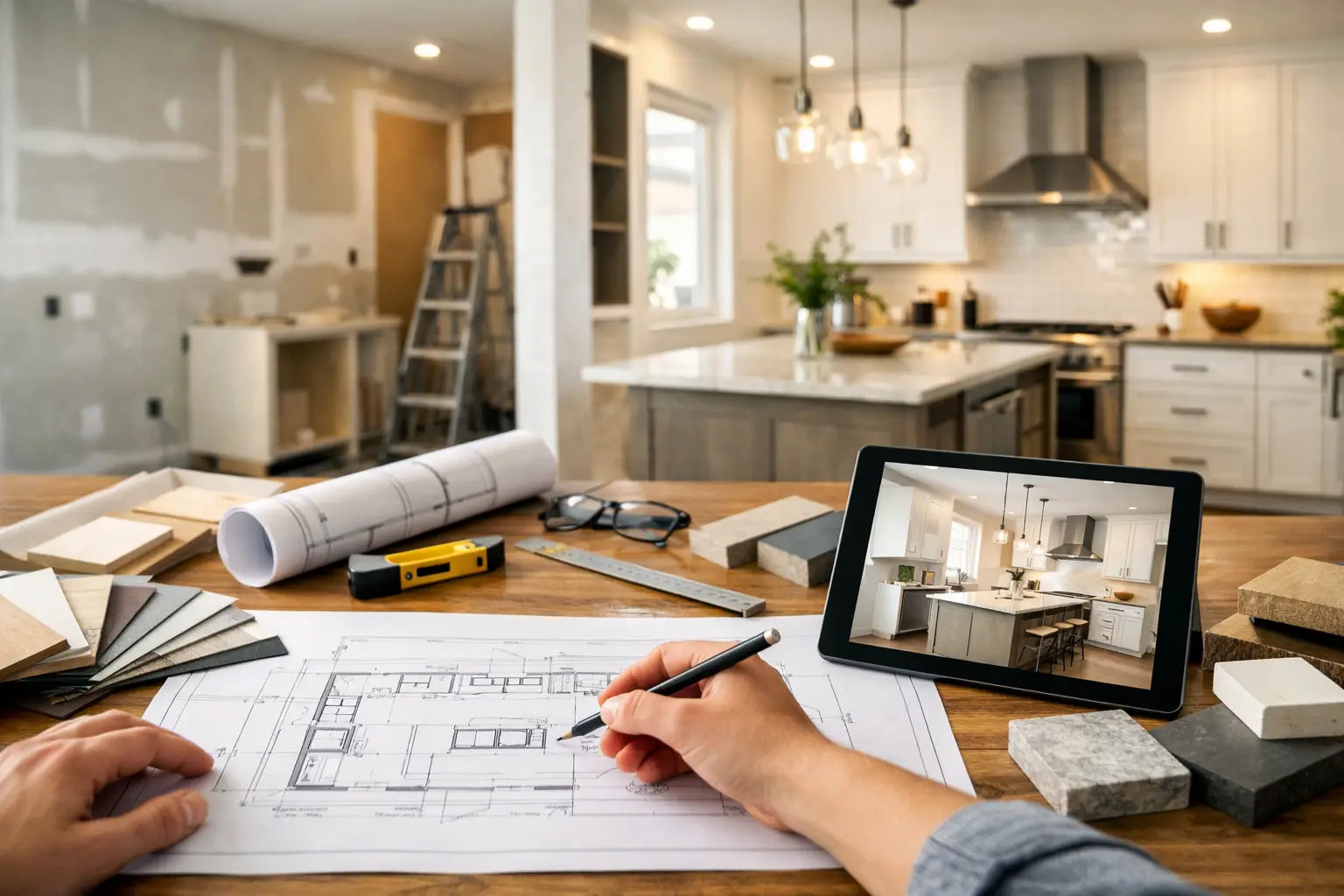
How to Plan Kitchen Remodel the Right Way
A kitchen remodel usually starts the same way – with one frustrating moment. Maybe storage never makes sense, the layout slows down every meal, or the finishes remind you the room is overdue for an update. If you’re asking how to plan kitchen remodel work without wasting time or budget, the key is to make smart decisions early, before design ideas and construction details start competing for attention.
A well-planned kitchen is not just about cabinets and countertops. It affects how your home functions every day, how comfortably your household moves through the space, and how much long-term value the project delivers. The best remodels feel intentional because they are. They begin with clear priorities, realistic numbers, and a contractor who can guide the process with confidence.
Start with how your kitchen actually works
Before you choose finishes, take a close look at what is not working now. That sounds obvious, but many homeowners jump straight to inspiration photos and miss the practical issues that should shape the project. A beautiful kitchen that still has poor traffic flow or limited storage will never feel fully finished.
Think about how you use the room on a normal weekday. Is it a serious cooking space, a family gathering zone, a homework station, or all three? Do you need wider walkways, better lighting, more pantry space, or room for two people to cook at once? If you entertain often, seating and circulation may matter as much as appliances. If your household is growing, durability may matter more than trend-forward materials.
This stage is where priorities get clearer. Usually, homeowners want some combination of better function, updated style, and stronger resale value. The balance between those three will influence every major decision that follows.
Set a budget with room for real-world conditions
One of the most important parts of how to plan kitchen remodel projects is understanding what your budget needs to cover. In a high-use space like the kitchen, costs are not limited to visible finishes. Cabinetry, electrical updates, plumbing changes, ventilation, flooring, permits, and labor all shape the final number.
A useful budget starts with ranges, not guesses. If you know you want custom or semi-custom cabinetry, premium appliances, stone surfaces, and layout changes, your investment will look very different from a cosmetic refresh that keeps plumbing and electrical in place. Moving walls, relocating sinks, or adding windows can improve the space dramatically, but they also increase scope, timeline, and cost.
It also helps to leave a contingency in the budget. Once demolition begins, older homes can reveal wiring issues, framing irregularities, or hidden damage that was impossible to confirm earlier. Planning for that upfront protects the project from turning stressful later.
For many homeowners, financing is part of making the right kitchen possible rather than settling for a smaller update that does not solve the real problem. That can be a practical option when the goal is lasting value and better daily function.
Decide whether the layout should stay or change
Layout is where a kitchen remodel becomes either highly efficient or unnecessarily expensive. Keeping the existing footprint can control costs, especially if plumbing and gas lines stay close to their current locations. But keeping a bad layout just to save money can be shortsighted if the kitchen does not support the way you live.
The right question is not simply, Can this stay where it is? It is, Should it?
If your refrigerator blocks circulation, your island makes movement awkward, or your cooktop, sink, and prep areas are too far apart, a new layout may be worth the investment. In open-concept homes, the kitchen also needs to relate well to dining and living areas. Sight lines, seating, and storage become part of a larger plan, not just a single room update.
A professional design-build team can help identify where layout changes will create the most value and where they may add cost without enough benefit. That kind of guidance matters because not every structural or plumbing change is equally worthwhile.
Choose materials for daily life, not just first impressions
A kitchen can look impressive in a showroom and still be a poor fit for your home. Material selection should reflect how much wear the space gets, how much maintenance you want, and how long you expect the design to feel current.
Cabinet construction and finish quality matter more than many homeowners expect. Cabinets take daily abuse, and lower-quality products tend to show it quickly. Countertops should balance appearance with durability, especially around heat, spills, and impact. Flooring should hold up to traffic and moisture without becoming difficult to maintain.
This is also where restraint can be valuable. Not every element needs to be a statement piece. In many successful kitchens, one or two focal materials carry the design while the rest support longevity and function. That often creates a more timeless result than chasing every current trend at once.
Plan storage before you plan style details
Storage is one of the fastest ways to tell whether a kitchen was thoughtfully designed. It is also one of the easiest things to underestimate. A kitchen may have plenty of cabinetry on paper and still lack useful storage where it matters most.
When planning cabinetry, consider what you actually need to store and where it should live. Pots and pans should be close to cooking areas. Everyday dishes should be easy to access from the dishwasher and dining space. Trash and recycling need a practical home. Small appliances, spices, cutting boards, serving pieces, and pantry goods all work better when assigned purpose-built zones.
Deep drawers, pull-out shelves, tray storage, appliance garages, and pantry organization can dramatically improve how the room functions. These features are rarely the most photogenic part of the project, but they often become the part homeowners appreciate most after move-in.
Understand the timeline from design to completion
Kitchen remodels feel faster when expectations are realistic from the beginning. Planning, design decisions, estimating, material ordering, permitting, and construction all take time, and some phases cannot be rushed without creating problems later.
Custom cabinetry and specialty materials can extend lead times. Permit approval may affect the start date. If structural work is involved, sequencing becomes even more important. And because the kitchen is one of the most interconnected spaces in the home, several trades must coordinate closely.
That is why early decision-making matters. The more selections that are finalized before construction begins, the smoother the build typically goes. Mid-project changes are possible, but they often affect schedule and budget. Good planning gives you flexibility where it counts and fewer surprises where it does not.
Know what to ask before hiring a contractor
If you want to know how to plan kitchen remodel work successfully, contractor selection belongs near the top of the list. Even an excellent design can fall short if execution, communication, or project management is inconsistent.
Look for a contractor with clear experience in kitchen remodeling, a strong portfolio, and a process that feels organized from the first conversation. Ask how estimates are built, how change orders are handled, how the schedule is communicated, and who your main point of contact will be. You should also ask about permitting, trade coordination, and how the team protects the rest of the home during construction.
The right fit is not just about price. It is about trust, responsiveness, and whether the company can translate your goals into a finished space with quality craftsmanship. In a market like Denver, where homeowners are investing thoughtfully in both lifestyle and property value, that level of execution makes a real difference.
Hammer Hero works with homeowners who want more than a surface-level update. The goal is a kitchen that reflects your vision, supports how you live, and holds up beautifully over time.
Expect a few trade-offs and make them on purpose
Every remodel involves choices. You may decide between a larger island and more walkway space, between custom cabinetry and a shorter timeline, or between premium appliances and higher-end finishes elsewhere. None of those decisions are wrong. The key is to make them intentionally.
This is where clarity beats perfection. A kitchen that solves your biggest daily frustrations and aligns with your priorities will feel far more successful than one that tries to do everything at once. Thoughtful planning gives you the confidence to invest where it matters most.
The best kitchen remodels do not happen because every decision was easy. They happen because the right decisions were made in the right order, with a clear plan behind them. If your kitchen is ready to work better, look better, and add lasting value to your home, start with the questions that matter most and build from there.
